
Data is growing faster and more complex than ever before everyday. Businesses now collect and store massive amounts of information across cloud platforms, endpoints, collaboration apps, and legacy systems. But raw data without structure creates risk, from compliance blind spots and security gaps to wasted storage and operational inefficiencies.
Data classification tools solve this problem by automatically discovering, organizing, and labeling data based on sensitivity, regulatory requirements, and business value. These tools help organizations pinpoint where critical data lives, enforce protection policies, and support compliance with regulations like GDPR, HIPAA, and PCI-DSS.
In this guide, we explore the top data classification tools and software products for 2026. You’ll learn what these tools do, why they matter, and how they strengthen data governance, security, and compliance across modern IT environments.
What Is Data Classification?
Data classification is the structured process of organizing and categorizing data based on its sensitivity, business value, and security needs. It helps organizations understand what data they have, where it resides, and how it should be protected.
At its core, data classification assigns meaningful labels or tags to datasets. These labels indicate how data should be handled, who can access it, and what security controls apply. For example, highly sensitive data like customer financial records may receive stricter protections than public marketing materials.
This process is essential for managing data in modern IT environments. Without classification, organizations struggle to secure their information, comply with regulations, or make efficient use of storage and analytics resources.
Data classification goes beyond simple organization. It lays the foundation for effective data governance, security enforcement, and regulatory compliance which allows businesses to apply the right protections and reduce risk across their data landscape.
In short, data classification transforms raw, unstructured data into a usable asset. It makes data more discoverable, easier to manage, and safer to use in business processes.
Why Data Classification Tools Are Essential
Data is one of the most valuable assets a business owns, but it also carries increasing risk. Data classification tools are essential because they automate the discovery, labeling, and protection of sensitive information at scale, helping organizations stay secure, compliant, and efficient.
First, these tools strengthen data security. By identifying and categorizing sensitive data, security teams can apply strong protections where they matter most. This targeted approach reduces the chance of breaches and unauthorized access.
They also make regulatory compliance simpler and more reliable. Laws like GDPR, HIPAA, and CCPA require organizations to know where sensitive data resides and how it’s protected. Classification tools map data to legal requirements, streamline audits, and lower the risk of costly penalties.
Beyond security and compliance, data classification tools improve operational efficiency. When data is labeled and organized, teams can find, manage, and use information faster. This clarity saves time, cuts storage costs by identifying redundant or outdated data, and supports better decision-making.
Finally, these tools build trust with customers and stakeholders. Demonstrating strong data governance shows that an organization treats sensitive information responsibly, an increasingly important factor in business relationships and brand reputation.
In short, data classification tools are indispensable for any organization that wants to secure its data, meet compliance obligations, cut costs, and operate more intelligently in 2026 and beyond.
Key Features of Modern Data Classification Tools
Modern data classification tools have evolved far beyond simple labeling. They now combine automation, advanced analytics, and strong integrations to help organizations secure, manage, and govern data in complex environments. Below are the key features that make these products essential.
1. Automated Discovery & Classification
Top tools automatically scan and detect data across structured, unstructured, and semi-structured sources. They reduce manual effort and uncover sensitive or regulated information wherever it lives including databases, cloud storage, SaaS apps, and file shares. This broad automated coverage ensures no critical data is overlooked.
2. AI/ML-Driven Pattern Recognition & Tag Propagation
Next-gen classification solutions employ AI and machine learning to identify patterns and contextual signals in data. These models go beyond basic keyword matching, reducing false positives and adapting to evolving content types. They also propagate tags intelligently as data moves or changes, keeping classifications accurate over time.
3. Support for Diverse Data Types
Modern systems handle a wide range of data formats:
- Structured data (databases, tables)
- Unstructured data (documents, emails, media files)
- Semi-structured data (JSON, XML, logs)
This flexible support ensures consistent classification across all enterprise data, not just traditional file or database systems.
4. Integration with Security & Governance Systems
Effective classification tools integrate with key platforms such as:
- DLP (Data Loss Prevention)
- SIEM (Security Information & Event Management)
- IAM (Identity & Access Management)
- Data catalogs and governance frameworks
These integrations allow classification metadata to feed into broader security controls, workflows, and governance policies; strengthening oversight and enforcement.
5. Real-Time Alerts & Remediation
Modern classification products provide real-time detection and alerts for sensitive data exposure or policy violations. They can trigger automated remediation actions such as restricting access, triggering encryption, or feeding alerts into incident systems to respond quickly to risks.
6. Dashboards & Reporting for Audits & Compliance
Built-in dashboards show classification status, risk exposure, and compliance posture at a glance. Tools also generate audit-ready reports and logs that help demonstrate regulatory adherence; vital for GDPR, HIPAA, PCI-DSS and other mandates. This reporting simplifies audits and supports governance teams.
7. Ease of Use (No-Code & Spreadsheet Integrations)
User experience matters. Many tools offer no-code interfaces, intuitive tagging workflows, and integrations with familiar formats like spreadsheets. This accessibility empowers both technical and non-technical users to apply classification rules, reducing dependency on specialized staff.
Top Data Classification Tools in 2026
Choosing the right data classification tool can transform how your organization manages, protects, and governs its data. In 2026, the market includes robust enterprise platforms, cloud-native solutions, and flexible tools tailored to specific needs.
| Tool / Platform | Best For | Key Strengths | Deployment Type |
| Microsoft Purview Information Protection | Enterprise security & Microsoft 365 ecosystems | Broad integration with Microsoft tools, automated classification, policy enforcement | Cloud‑centric (Azure/M365) |
| Forcepoint DLP | Large enterprises with advanced analytics needs | AI‑driven classification, real‑time policy enforcement, unified control | Hybrid (Cloud + On‑Prem) |
| Varonis Data Classification Engine | Security‑driven classification for unstructured data | Deep analytics, access pattern insights, insider risk detection | Hybrid (Cloud + On‑Prem) |
| Broadcom Symantec DLP | Comprehensive enterprise protection | Content inspection, policy control, endpoint + network coverage | Hybrid / Enterprise‑grade |
| Google Cloud DLP | Cloud‑native classification | Scales data discovery & tagging at cloud size, supports masking & tokenization | Cloud‑native |
| Securiti | Privacy & compliance automation | Contextual classification with governance + privacy workflows | Cloud & Hybrid |
| Satori | Real‑time access governance | Continuous classification as data is accessed, policy enforcement | Cloud‑native / Data warehousing |
| Numerous.ai | Spreadsheet‑centric, no‑code classification | AI classification directly inside spreadsheets | Cloud / SaaS integrated |
| Atlan | Metadata‑driven classification within data catalogs | Unified metadata tags for catalog governance | Cloud / Data catalog stacks |
| OneTrust Data Discovery & Classification | Compliance‑focused classification | Regulatory workflow support, DSAR automation | Hybrid / Enterprise |
| ManageEngine DataSecurity Plus | SMB & mid‑size compliance needs | Predefined compliance templates, file auditing & tagging | Hybrid / On‑Prem & Cloud |
Enterprise-Grade Solutions
Enterprise organizations need robust, scalable data classification solutions that secure sensitive information, support compliance, and integrate with complex IT environments.
Microsoft Purview Information Protection
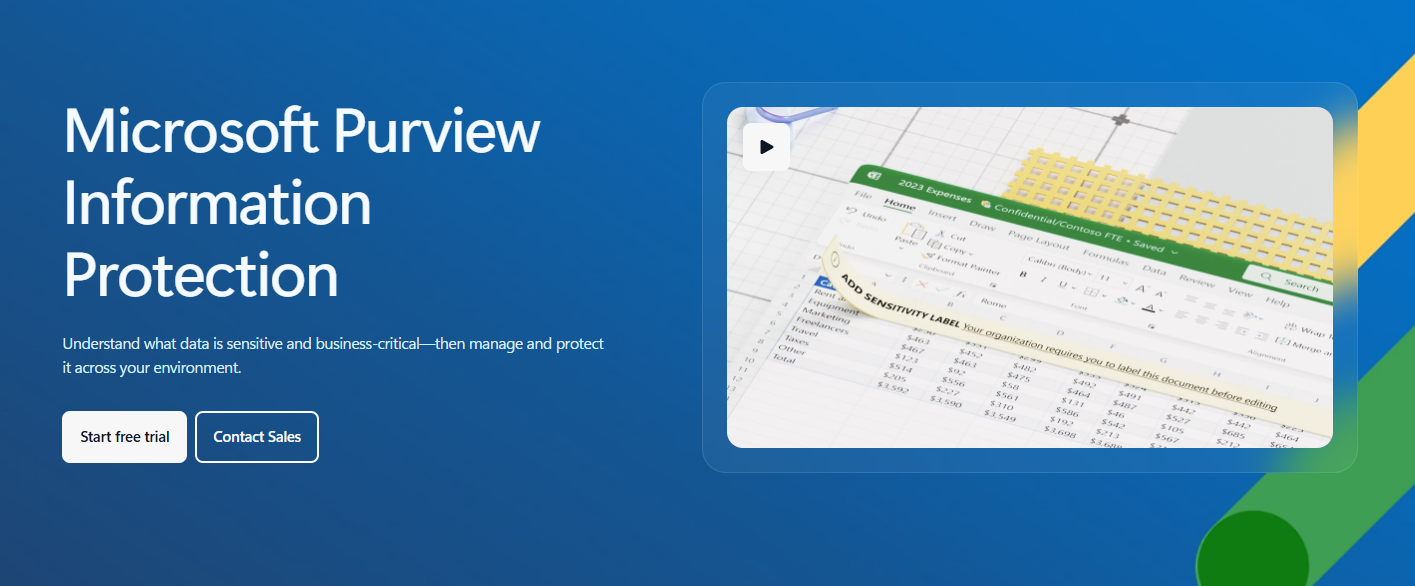
Microsoft Purview Information Protection (including what was formerly Azure Information Protection) provides a comprehensive classification and protection framework across Microsoft 365 and Azure services.
It automatically discovers and labels sensitive data using built-in and trainable classifiers.
Sensitive information types, policy-driven labels, and analytics help organizations govern data across SharePoint, OneDrive, Exchange, Teams and other sources with a unified interface.
Purview also integrates classification with encryption, access control, and DLP workflows for consistent enterprise-wide protection.
Forcepoint DLP
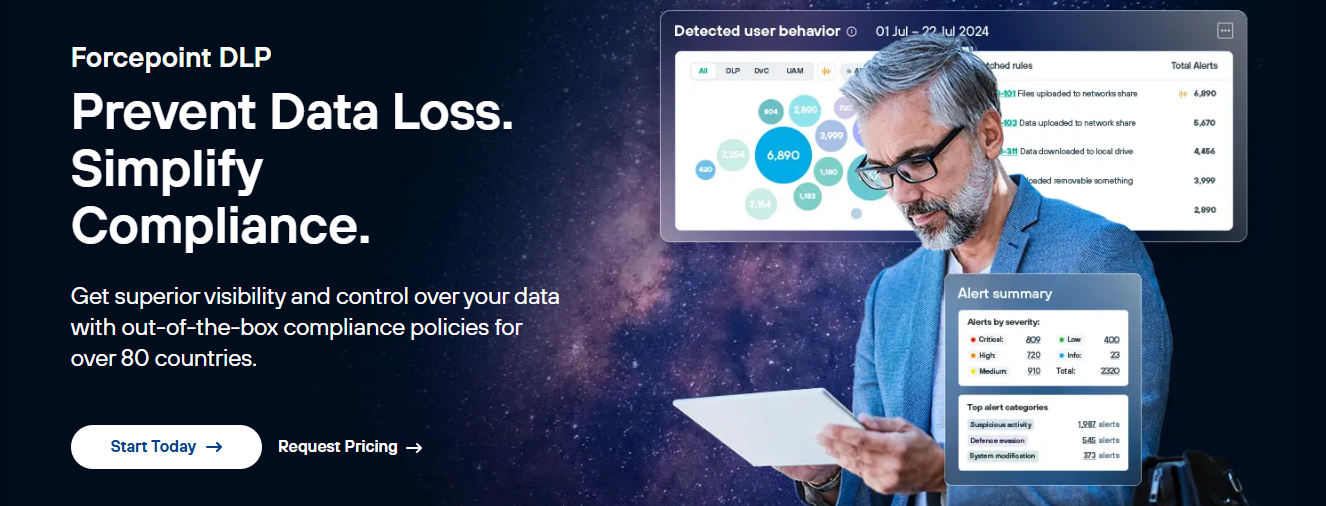
Forcepoint Data Loss Prevention (DLP) includes advanced classification capabilities tightly integrated with its data security platform.
Using AI Mesh technology, Forcepoint applies intelligent classification in real time across data stores and endpoints, improving accuracy and reducing manual effort.
It supports automated tagging and visual metadata injection, enabling precise enforcement of security policies.
Its unified policy engine offers centralized control over data monitoring and protection across cloud, network and endpoint environments.
Varonis Data Classification Engine
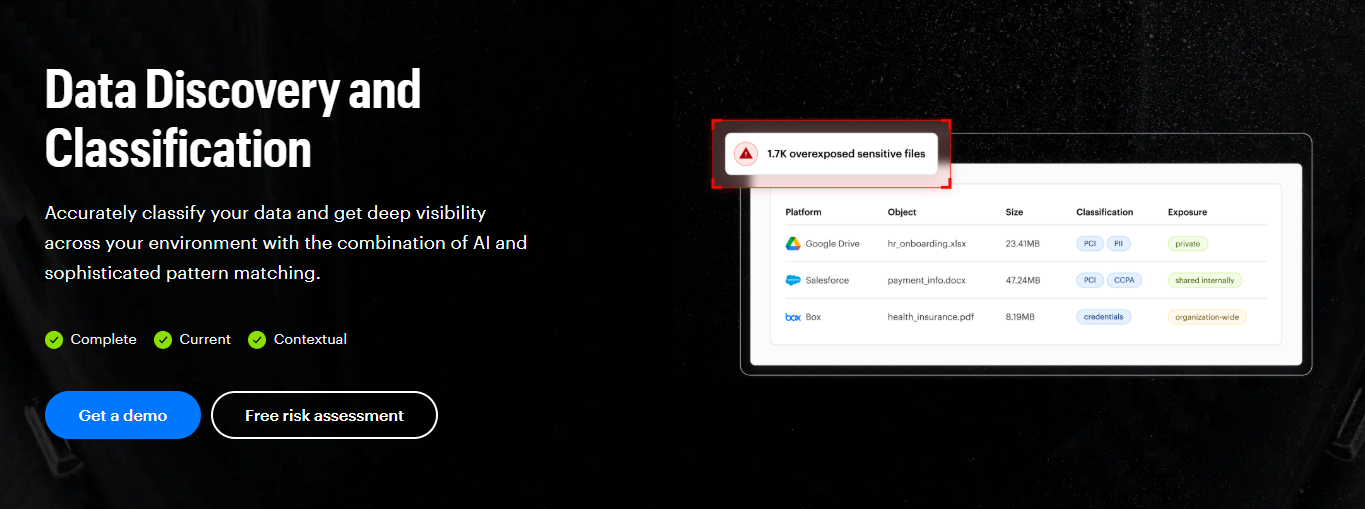
Varonis Data Classification Engine is designed for deep classification and contextual analysis, especially in complex enterprise environments with large volumes of unstructured data.
It uses pattern matching and activity analytics to identify sensitive information, assess permissions risk, and highlight exposures.
Varonis further enhances governance by combining classification with behavior-based alerts and remediation insights, making it useful for compliance and insider risk management.
Broadcom Symantec DLP
Broadcom Symantec Data Loss Prevention remains a mature and widely deployed enterprise DLP platform with strong classification support.
It combines deep content inspection with comprehensive policy control across numerous channels including network, cloud and endpoint data.
Symantec’s classifier infrastructure, backed by decades of development, helps large organizations detect and manage classified data at scale while supporting regulatory and compliance requirements.
Cloud-Native & Modern Platforms
Cloud-native and modern data classification platforms deliver fast, scalable discovery and governance for modern distributed data environments.
These tools are built for hybrid cloud, SaaS, analytics stacks, and real-time access needs, helping organizations maintain visibility, security, and compliance across all data sources.
Google Cloud DLP – Scalable Cloud Classification
Google Cloud DLP (part of Google’s Sensitive Data Protection suite) offers powerful, automated discovery and classification for sensitive data stored in Google Cloud services such as BigQuery, Cloud Storage, and Datastore.
It uses over 200 built-in detectors and supports custom info types to identify sensitive elements like PII and PHI.
Once classified, Cloud DLP’s tools enable de-identification, masking, tokenization, and risk analysis, all at cloud scale, while providing integration with Google Security Command Center and other services to streamline data security workflows.
Securiti – Privacy & Classification Automation
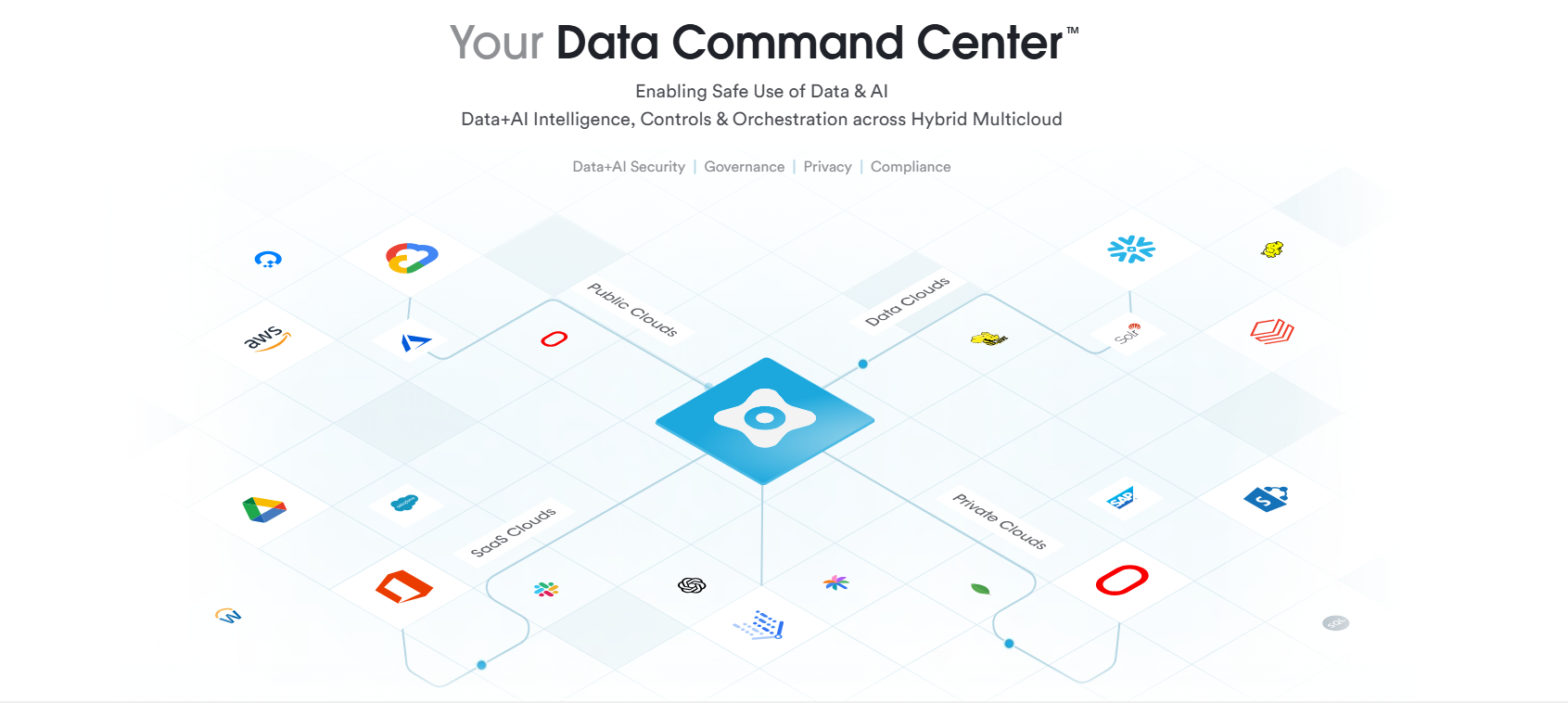
Securiti integrates automated discovery and data classification into a broader data governance and privacy platform.
It scans structured, semi-structured, and unstructured data across cloud, hybrid, and SaaS environments and applies automatic labeling and metadata tags.
These classifications feed into downstream privacy workflows, compliance reporting, and data access intelligence.
Securiti’s focus on contextual classification and automated labeling helps large organizations enforce data privacy and governance policies more efficiently across diverse systems.
Satori – Real-Time Data Access Governance
Satori is a modern data security and governance platform that continuously discovers and classifies sensitive data as it is accessed in real time.
It provides centralized visibility into sensitive data across databases, data warehouses, and data lakes, and keeps classifications up to date without manual scans.
In addition to classification, Satori enforces policy-based access control, real-time monitoring, and audit trails, making it suitable for environments where dynamic access control and compliance-ready reporting are priorities.
Its low-latency controls help maintain security in data-intensive analytics and AI workflows.
Emerging & Flexible Tools
Emerging and flexible data classification tools are ideal for teams that need specialized solutions, easy deployment, or industry-focused workflows.
These products bring innovation, automation, and approachable interfaces to data classification, making them excellent options for mid-size businesses, analytics teams, or environments that prioritize agility and user friendliness.
Numerous.ai – Spreadsheet-Centric, No-Code Classification
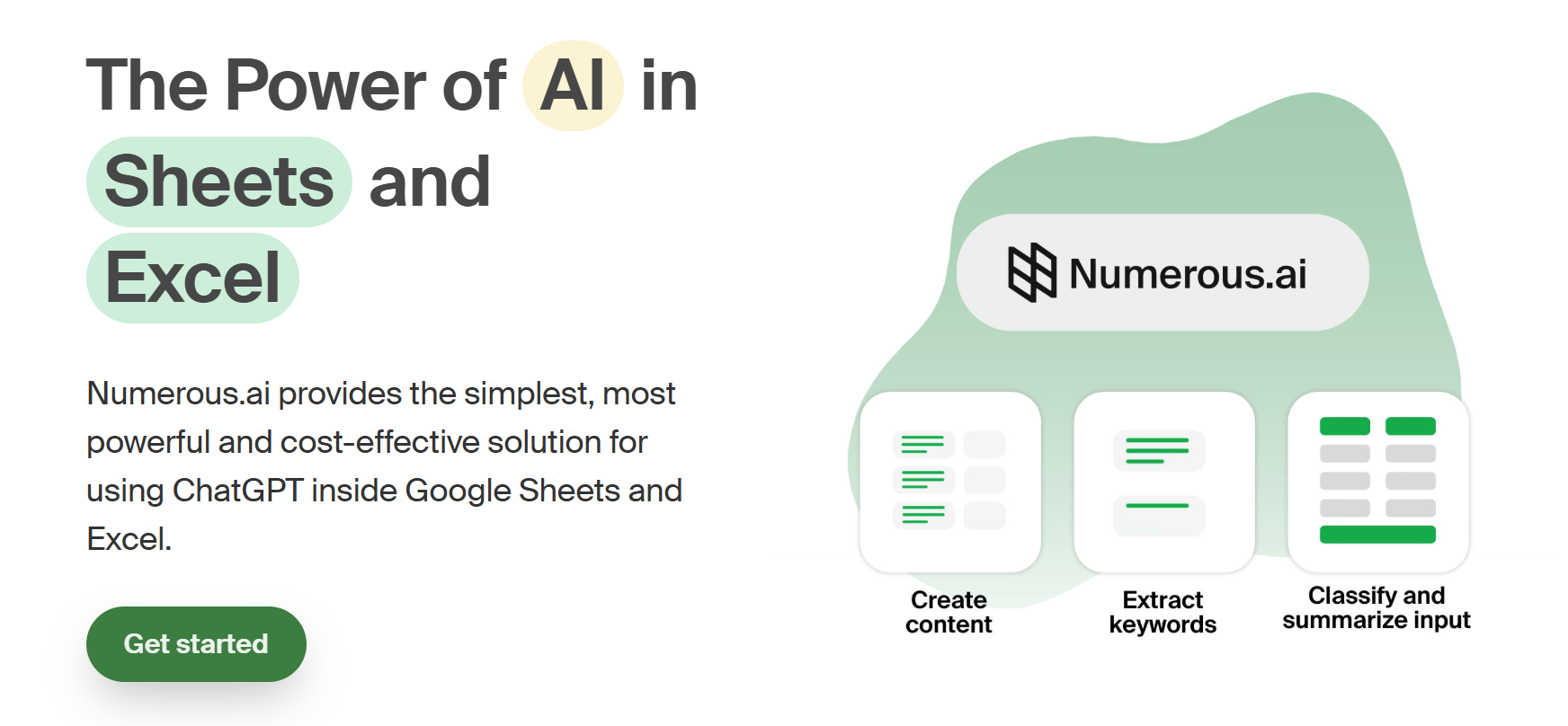
Numerous.ai stands out as a unique classification tool built directly into spreadsheets like Google Sheets and Microsoft Excel.
It uses AI to scan, detect, and label sensitive data in real time without requiring users to export data or switch platforms.
With natural language prompts and automated rules, teams can instantly classify data directly where they work, mask sensitive fields, or lock high-risk rows to prevent unauthorized sharing.
This spreadsheet-native approach makes classification accessible to business users and analysts without technical barriers.
Atlan – Metadata-Driven Classification in Data Catalogs
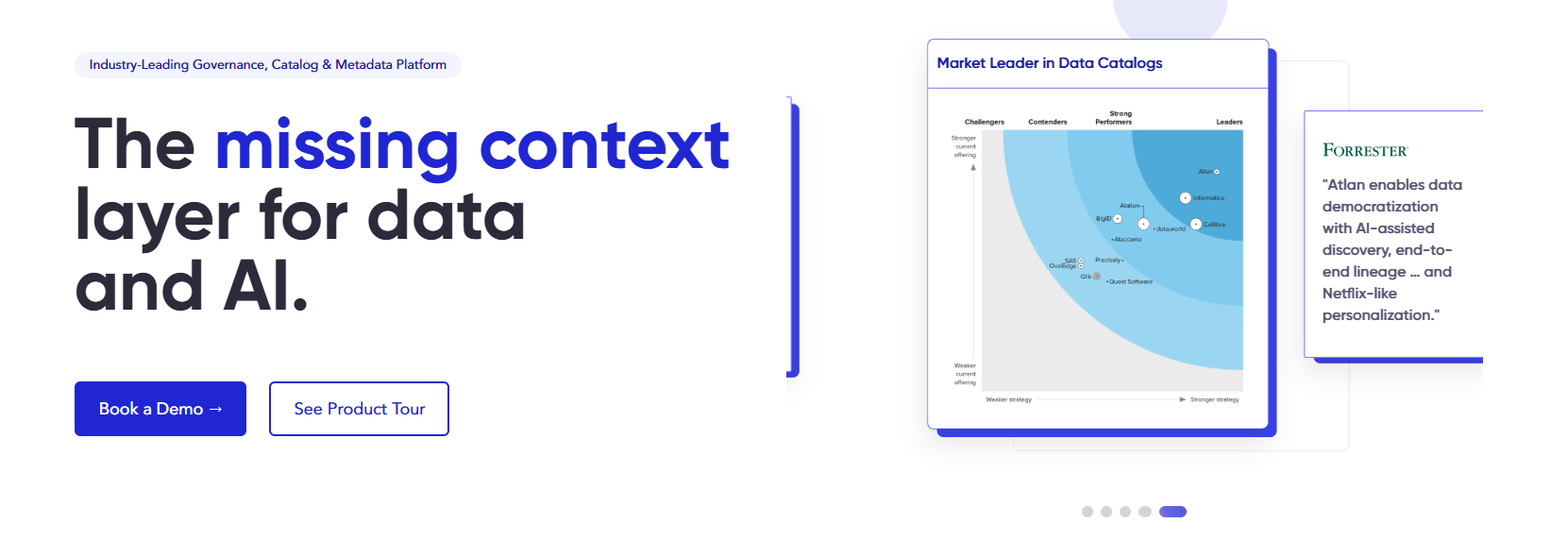
Atlan is an active metadata platform that embeds classification into a broader data governance and cataloging ecosystem.
Rather than classifying content alone, Atlan leverages metadata such as ownership, tags, lineage and context to apply consistent labels across data assets.
This metadata-driven approach ensures classification follows data workflows and governance policies, helping organizations scale classification across cloud platforms and modern data stacks with a unified view of data context and usage.
OneTrust / ManageEngine DataSecurity Plus – Compliance-Focused Tools
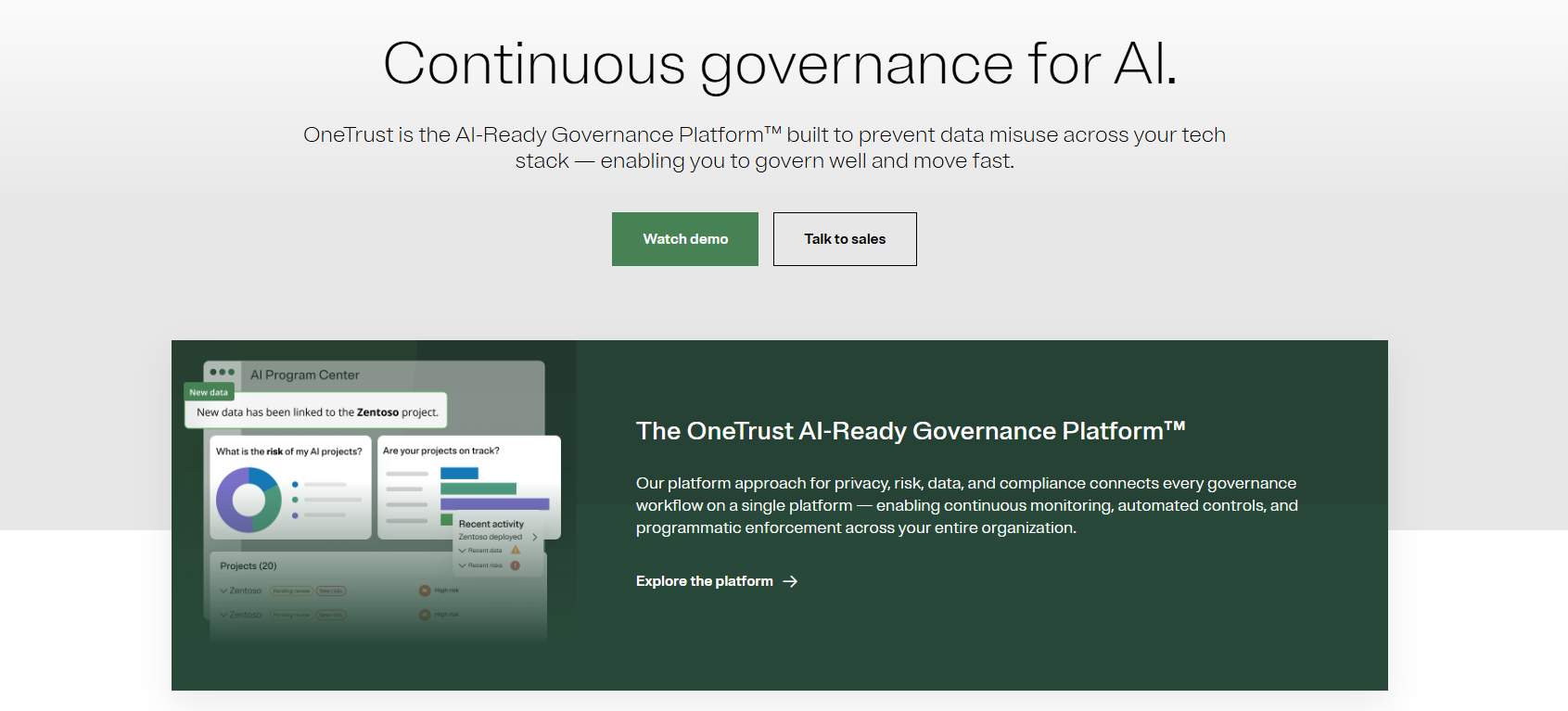
OneTrust Data Discovery & Classification combines deep scanning, field- and file-level classification, and automated inventorying of data across diverse sources.
It enhances compliance by providing visibility into data assets and applying classification that supports privacy, governance, and regulatory workflows (such as GDPR and CCPA).
Its automation and integrations help teams enforce consistent policies and streamline subject access requests.
Similarly, ManageEngine DataSecurity Plus provides classification as part of a unified security platform.
It identifies and classifies sensitive files such as PII and ePHI across file servers and databases, assigns risk scores, and supports compliance controls based on classification outcomes.
This tool is particularly suited for organizations prioritizing regulatory adherence and operational security.
How to Choose the Right Data Classification Tool?
Choosing the right data classification tool is crucial for effective data governance, security, and compliance. With many options available, it’s important to evaluate each tool against core criteria that match your organization’s needs.
1. Match Tool Capabilities to Your Business Needs
Start by understanding your specific goals. Do you need strong security enforcement? Or do you prioritize compliance reporting or analytics integration? Knowing what you want to protect and why helps narrow your options faster.
2. Evaluate Classification Automation
Look for tools that automate data discovery and classification. Automated engines that use pattern recognition, metadata, or AI reduce human error and speed up processing, especially in large data environments.
3. Check Integration with Existing Systems
Your classification tool should integrate smoothly with your current infrastructure such as DLP, SIEM, IAM, and cloud platforms. Seamless integration ensures data governance and security workflows are consistent across your ecosystem.
4. Support for All Data Types and Formats
Ensure the tool can scan and classify all the data formats your organization uses, including structured, semi-structured, and unstructured data. Compatibility with databases, cloud storage, files, and collaboration platforms is especially important.
5. Scalability and Performance
Your tool must scale with data growth without slowing performance. Evaluate whether it can handle increasing data volumes and complex classification logic without sacrificing speed or accuracy.
6. Ease of Use and Adoption
Choose tools with intuitive dashboards, user-friendly interfaces, and minimal setup complexity. A simpler learning curve encourages adoption across teams and reduces dependency on IT specialists.
7. Trial, Demo, and Proof of Concept
Take advantage of trials and demos offered by vendors. Hands-on testing lets you see how the tool performs in your real environment, how it integrates with workflows, and how easy it is for users to adopt.
8. Evaluate Reporting and Compliance Support
Make sure the tool offers rich reporting features to demonstrate regulatory compliance. Dashboards, audit trails, and compliance templates should match the standards important to your industry (e.g., GDPR, HIPAA).
9. Review Costs and Total Value
Consider not just upfront licensing but total cost of ownership including maintenance, support, onboarding, and scalability costs. Tools that automate more processes often deliver higher value over time.
10. Check Vendor Support and Reputation
Strong vendor support and a solid market reputation matter, especially for tools that become critical to your security and compliance posture. Look for user reviews, case studies, and expert ratings before making a final decision.
Conclusion
Having a robust data classification strategy is essential in modern data-driven world. Data classification tools help organizations identify, tag, and protect sensitive information based on its value and risk profile. This process strengthens security, improves compliance, and streamlines data management across complex, hybrid environments.
As we’ve explored in this guide, modern tools leverage automation, AI, and deep integrations to classify data at scale. They support diverse data types, enforce governance policies, and provide real-time insights that help teams act with confidence.
Choosing the right solution means aligning your technical needs with business goals: whether you prioritize cloud scalability, enterprise-grade security, or flexible, user-friendly workflows. By following best practices and understanding each tool’s strengths, you can build a classification program that reduces risk, boosts compliance, and unlocks better data value in 2026 and beyond.
Effective data classification empowers organizations to treat data as a strategic asset, not just a liability. With the right tools and strategy, you can secure sensitive information, simplify audits, and drive smarter decision-making across your data ecosystem.